Trex vs. TimberTech Decking: The 2026 Master Craftsman’s Comparison Checklist
- chris903504
- Jul 8
- 12 min read
The most expensive decking board on the market might actually be the wrong choice for your specific backyard. When you're standing in a showroom comparing Trex vs TimberTech decking, it's easy to feel overwhelmed by technical talk of PVC versus composite or three-sided versus four-sided capping. You want a stunning outdoor space that won't warp, rot, or burn your feet during a summer barbecue. We understand that this is a significant investment in your home's value and your family's comfort. Whether you're worried about your golden retriever's claws scratching the finish or you're tired of the confusion surrounding material durability, you deserve a straight answer.
This guide provides a Master Craftsman's perspective on the definitive differences between these two industry leaders. We'll compare heat dissipation, scratch resistance, and long-term warranties to help you select the perfect material for your environment. You'll finish this article with a clear winner for your climate and a checklist to ensure your contractor's recommendation is the right one for your home's transformation. By focusing on precision and longevity, we'll help you move from a confusing selection process to a confident project launch.
Table of Contents
Understanding the Foundations: Wood-Plastic Composite vs. Capped Polymer
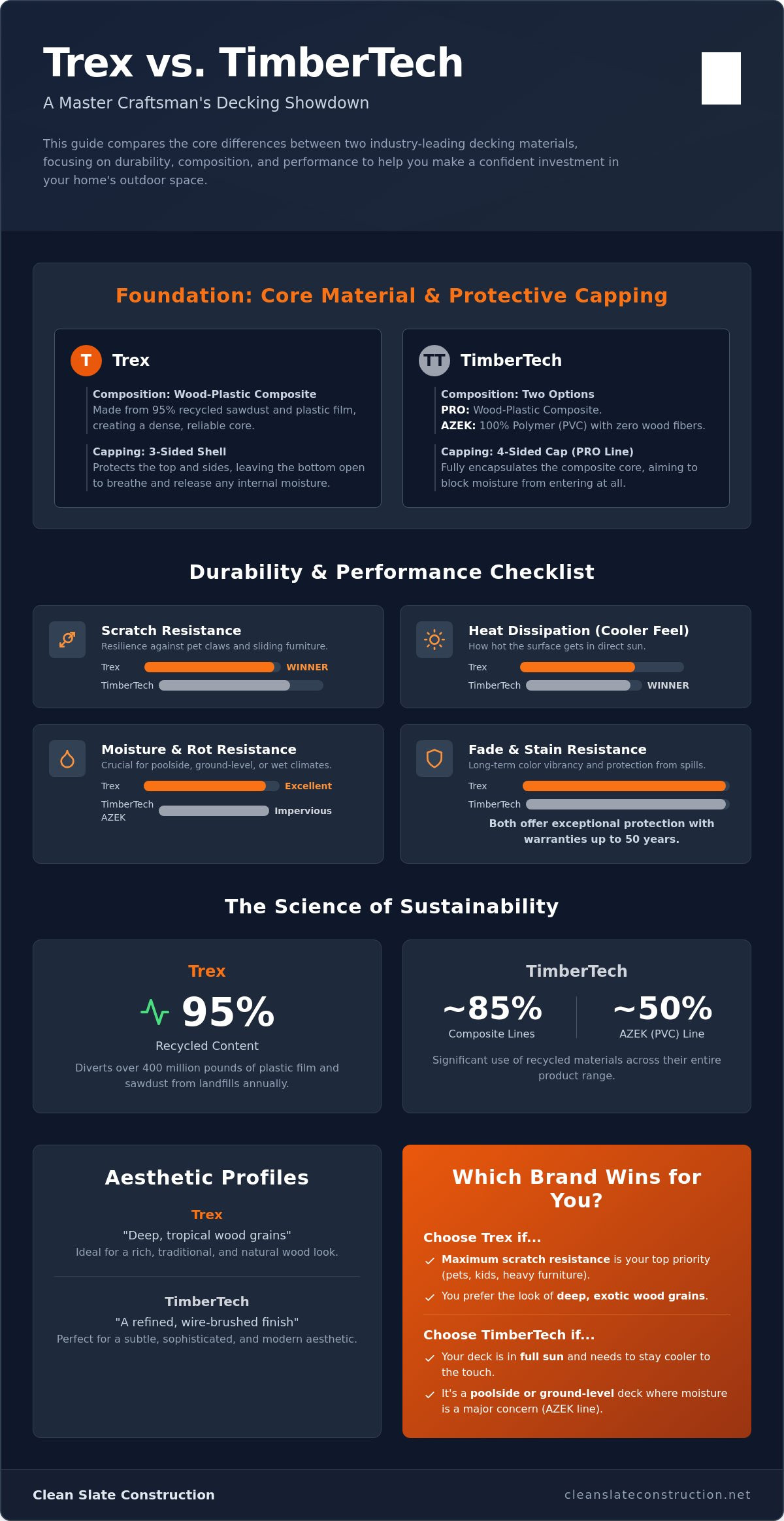
Selecting the right material for your outdoor transformation begins with what lies beneath the surface. While both brands offer high-performance solutions, the fundamental chemistry of Trex vs TimberTech decking determines how your investment will age over the next several decades. Trex is built upon a foundation of Wood-Plastic Composites, utilizing a blend of 95% recycled sawdust and plastic film to create a dense, reliable board. TimberTech offers a more bifurcated approach. Their PRO line mirrors the wood-plastic composite structure, while their AZEK line is a 100% polymer product that contains no organic wood fibers at all. This distinction is vital because the core material dictates how much your deck will expand or contract as the seasons shift.
Capping technology is where these two giants diverge most significantly in their quest for durability. Trex utilizes a high-performance three-sided shell that protects the top and sides of the board while leaving the bottom open to breathe. This design allows any internal moisture to escape the core. TimberTech PRO composite boards feature a four-sided cap, fully encapsulating the core in a protective sleeve that aims to block moisture from every angle. Whether you prioritize the breathability of a three-sided cap or the total encapsulation of a four-sided shell, the precision of the manufacturing process ensures that neither brand is susceptible to the rot that plagues traditional lumber.
The Science of Sustainability
Manufacturing processes have reached a peak of precision in 2026, making eco-friendly choices easier than ever for homeowners. Trex maintains its position as an industry leader by diverting over 400 million pounds of plastic film from landfills annually, resulting in a board made of 95% recycled content. TimberTech has made significant strides in this area as well. Their composite lines use up to 85% recycled materials, and even the AZEK PVC line incorporates approximately 50% recycled content. Today's boards aren't just greener; they're denser and more realistic. Recent improvements in grain pressing mean you'll no longer have to sacrifice the environment for a premium, high-end aesthetic.
Moisture Resistance and the Rot Factor
For homeowners planning poolside retreats or ground-level transformations, moisture resistance is the most critical variable. TimberTech AZEK is the gold standard for these high-moisture environments because its 100% polymer composition is entirely impervious to water damage. Trex’s capped composite remains highly resistant to humidity and spills in standard backyard settings, though the presence of organic fibers requires proper ventilation. Hydrostatic pressure is the force exerted by standing water or saturated soil against the underside of the decking material. By choosing a material suited to your specific moisture levels, you ensure your deck remains a stable, beautiful extension of your home for a lifetime.
The Durability Checklist: Scratches, Heat, and Fading
A deck is a functional extension of your home, but it's also a surface that must endure the elements, the family dog, and the scorching summer sun. When evaluating Trex vs TimberTech decking, durability isn't just about structural longevity; it's about how the surface performs after years of heavy foot traffic and seasonal shifts. Trex Transcend has established itself as the benchmark for scratch resistance, utilizing a proprietary shell that resists the gouges often caused by pet claws or sliding furniture. Whether you're hosting a large neighborhood gathering or simply enjoying a quiet morning, the peace of mind that comes from a resilient surface is invaluable.
While Trex excels in surface hardness, TimberTech often leads in thermal management and slip resistance. Their AZEK line utilizes advanced polymer technology designed to stay cooler underfoot, which is a significant advantage for south-facing projects. According to Good Housekeeping's Best Composite Decking reviews, both brands offer exceptional fade and stain resistance, backed by warranties that extend up to 50 years. This level of protection ensures your investment remains vibrant even in areas with high UV exposure. Traction is another critical factor, and TimberTech’s unique surface texture often provides a slight edge in wet-surface safety for rain-prone or coastal climates.
The Barefoot Test: Managing Heat in Full Sun
Walking across a deck in mid-July shouldn't feel like a test of endurance. TimberTech AZEK’s lighter color profiles stay up to 30% cooler than traditional wood-plastic composites because they don't contain the organic materials that trap heat. If you prefer the look of Trex, opting for lighter shades can help mitigate thermal mass and keep surface temperatures manageable. High-density boards take longer to heat up, but they also hold onto that heat well into the evening hours. For decks with zero shade, we often recommend materials with higher heat dissipation properties to ensure the space remains usable for children and pets during peak summer hours.
Pets and Furniture: The Scratch Reality
Pet claws and sliding chair legs are the primary enemies of a pristine deck finish. Trex Transcend features a capping that is remarkably thick, providing a robust barrier against surface gouges. TimberTech Legacy also performs well, though the softer polymer shell in the AZEK line may show minor scuffs more easily than the harder composite shells. It's vital to remember that you can't sand out scratches on capped boards without destroying the protective layer. We suggest using high-quality furniture pads and keeping pet nails trimmed to preserve the precision of your deck's aesthetic. If you're ready to start your composite deck installation, choosing the right hardness rating is the first step toward a worry-free outdoor space.
Aesthetic Transformation: Grain Patterns and Color Profiles
The visual evolution of composite materials has reached a point where differentiating between synthetic boards and natural wood requires a close-up inspection. When you're weighing Trex vs TimberTech decking, the decision often rests on the specific "vibe" of the grain pattern. Trex is renowned for its deep, heavy wood grains and iconic tropical streaking patterns that mimic the look of exotic hardwoods like Ipe or Mahogany. These patterns are embossed under high pressure, ensuring the texture feels substantial and organic underfoot. Conversely, TimberTech’s Landmark and Legacy collections favor a more subtle, wire-brushed, low-gloss finish. This aesthetic appeals to homeowners seeking a sophisticated, matte look that doesn't reflect harsh midday sunlight.
Precision in the ordering process is just as important as the material itself. Even with 2026 manufacturing standards, color "batching" can result in slight variances between production runs. A master craftsman ensures all boards for your transformation are sourced from the same lot to maintain perfect color consistency across the entire surface. This attention to detail eliminates the patchwork appearance that often ruins DIY attempts. Modern technology has virtually eliminated the "plastic sheen" associated with early composite generations, leaving you with a rich, authentic finish that stays vibrant for decades.
The Master Craftsman’s View on Design Versatility
Architectural flexibility is where these brands truly showcase their engineering. TimberTech offers a unique advantage with multi-width boards, allowing for intricate patterns or varied plank sizes that create a custom, high-end architectural feel. Trex boards offer a familiar rigidity that many builders prefer for installation speed, and they remain the industry standard for curved designs. The material composition of Trex allows it to be heat-warped into custom radius shapes, which is ideal for circular seating areas or flowing staircases. Both brands offer integrated railing systems in aluminum and glass, ensuring your perimeter matches the precision of your deck surface.
Color Trends for 2026
We're seeing a clear shift toward cooler, more organic tones in modern residential projects. Scandinavian Grey and Muted Oak have become the dominant choices for homeowners looking to create a neutral, calming outdoor retreat. These shades provide a perfect backdrop for minimalist furniture and vibrant landscaping. To truly elevate a standard design, we recommend a "picture framing" technique, where a darker perimeter board surrounds the main decking. This provides a polished finish and hides the end-cuts for a cleaner look. For more insights on planning your project, check out the definitive guide to choosing a composite deck builder in 2026.
Investment and Protection: Costs, ROI, and Warranties
Financial clarity is the cornerstone of any successful home makeover. When comparing Trex vs TimberTech decking, the initial sticker price is only one part of a much larger equation. Both brands utilize a tiered pricing structure that allows homeowners to find a balance between their vision and their budget. Trex offers three primary tiers: Enhance (Basics and Naturals), Select, and the premium Transcend and Signature lines. TimberTech mirrors this with their Edge, PRO, and high-performance AZEK collections. While entry-level boards for both brands are competitively priced, the high-end Trex Transcend often overlaps with TimberTech’s mid-range PRO series in terms of material cost. Choosing a premium board isn't just about the immediate aesthetic; it's a strategic move to maximize your home's resale value in 2026.
The real cost of ownership becomes apparent when you look at the next 15 to 20 years. A premium composite deck typically yields a high return on investment because it eliminates the recurring expenses of sanding, staining, and sealing required by traditional lumber. Warranties reflect this durability. Trex offers a tiered system ranging from a 25-year limited residential warranty for Enhance up to a 50-year warranty for their Transcend and Signature products. TimberTech provides a 25-year warranty on their Edge line, 30 years on PRO, and a lifetime limited warranty on their AZEK PVC collections. These warranties specifically cover material defects, splitting, and rot, while separate fade and stain warranties ensure your deck’s color remains consistent through decades of UV exposure.
Understanding the Warranty Fine Print
The "labor loophole" is a critical detail that many homeowners overlook during the planning phase. Most manufacturer warranties cover the cost of replacing defective boards but do not include the labor costs required to remove the old material and install the new deck. To mitigate this risk, it's essential to hire a "Pro Platinum" or "Elite" certified contractor. These professionals can often provide extended labor warranties that aren't available to the general public. Additionally, many of these premium warranties are transferable to the next homeowner, which serves as a powerful selling point if you decide to put your house on the market.
Long-term Maintenance Savings
Maintaining a composite deck is remarkably straightforward, requiring only a simple cleaning with soap and water twice a year to keep the warranty valid. This is a stark contrast to the intensive labor and chemical costs associated with natural timber. Over a 15-year period, the savings on stains, brushes, and professional power washing can total thousands of dollars, effectively bridging the gap in upfront costs. For homeowners who still prefer the natural character of real wood, exploring Expert Wood Deck Builders is a wise step to understand the trade-offs in maintenance and longevity. If you're ready to begin your outdoor transformation with a team that values precision, contact us at Clean Slate Construction to discuss your project.
The Ultimate Selection Checklist: Which Brand Wins for Your Home?
Choosing between Trex vs TimberTech decking isn't about finding a single "better" brand. It's about identifying which specific product line aligns with your backyard's unique environmental demands. Every project has its own set of variables, from the angle of the sun to the weight of your patio furniture. To help you finalize your choice, we've distilled the performance data into a definitive selection checklist based on your lifestyle and location.
Climate Check: If your deck faces south with zero shade, TimberTech AZEK wins for its superior heat dissipation and "CoolTap" technology.
Traffic Check: If you have large dogs or host frequent, heavy entertaining events, Trex Transcend remains the benchmark for shell hardness and scratch resistance.
Location Check: For decks situated near pools, hot tubs, or built at ground-level, TimberTech’s polymer core provides the ultimate protection against moisture and hydrostatic pressure.
Budget Check: If you're seeking the best entry-level value while still upgrading from traditional wood, Trex Enhance is the most practical choice for a cost-effective transformation.
Aesthetic Check: Choose Trex if you love the look of deep, rustic tropical grains; opt for TimberTech if you prefer a contemporary, wire-brushed matte finish.
Final Decision Steps
Confidence in your investment comes from more than just reading a brochure. We recommend a hands-on approach before you commit to a full installation. First, order physical samples of both brands and leave them in your yard for at least 48 hours. This allows you to see how the colors shift in your specific lighting conditions, from the bright morning sun to the soft evening glow. Second, perform a "Key Scratch Test." Take a house key and apply moderate pressure to the samples to see how the shell handles real-world friction. Finally, consult with a master craftsman to verify your home’s structural readiness, as the weight and fastening requirements of these materials differ from traditional timber.
Why Precision Installation Matters
The most expensive boards on the market will fail if the substructure isn't handled with meticulous care. Proper joist spacing is critical to prevent "bouncing," and the use of hidden fasteners ensures a smooth, high-end finish without visible screw heads. At Clean Slate Construction, we take pride in the details that most people never see. We ensure every board is laid with precision, from the ledger board to the final picture-frame trim. Your outdoor transformation deserves a steady hand and a visionary approach that takes ownership of the process from start to finish. If you're ready to move from planning to execution, contact Clean Slate Construction for a custom deck design consultation.
Start Your Outdoor Transformation with Confidence
Your choice between Trex vs TimberTech decking depends on the specific demands of your backyard and your family's lifestyle. Whether you prioritize the heat-dissipating properties of a polymer core or the rugged scratch resistance of a high-performance composite, both brands offer a level of precision that traditional wood simply cannot match. You now have the checklist needed to verify material suitability and ensure your investment is protected by a multi-decade warranty. A successful project requires more than just premium boards; it requires a steady hand and a commitment to quality.
At Clean Slate Construction, we bring a Master Craftsman’s eye to every project we touch. As a Christian-owned and operated business, we prioritize integrity, reliability, and meticulous care in every residential renovation. We specialize in premium Trex and TimberTech installations, ensuring that your vision is executed with the highest standards of workmanship from the first joist to the final fastener. Transform your backyard with a custom composite deck from Clean Slate Construction today. We look forward to building a space where your family can create lasting memories for years to come.
Frequently Asked Questions
Is TimberTech more expensive than Trex in 2026?
TimberTech typically carries a higher price tag, often ranging from 10% to 25% more than Trex depending on the specific product collection you choose. While Trex offers exceptional entry-level value with its Enhance and Select lines, TimberTech’s advanced PVC options represent a larger upfront investment. This cost difference usually reflects the specialized polymer chemistry and the four-sided capping technology found in TimberTech's premium lines.
Does composite decking really stay cooler than wood?
Most composite materials actually retain more heat than natural wood because of their high density and plastic content. However, TimberTech AZEK boards are specifically engineered to stay significantly cooler than traditional wood-plastic composites. To ensure your deck remains comfortable for bare feet, we recommend choosing lighter colors regardless of the brand you select for your outdoor transformation.
Can I install Trex or TimberTech boards over my existing wood deck frame?
You can resurface an existing frame if the substructure is structurally sound and meets specific joist spacing requirements. Most composite boards require joists to be spaced 16 inches on center, though diagonal patterns often require 12 inches. A professional inspection is vital to ensure your frame can support the weight of a Trex vs TimberTech decking upgrade without sagging or structural failure.
Which brand is better for homeowners with large dogs?
Trex Transcend is widely considered the superior choice for pet owners due to its exceptionally hard, proprietary outer shell. This capping is specifically designed to resist the gouges and scratches caused by large dogs during high-energy play. While TimberTech is remarkably durable, the softer polymer used in the AZEK line may show minor scuffs more readily under heavy claw traffic than the denser Trex composite.
What is the most realistic-looking composite decking color available?
Realism is often found in the texture, and TimberTech’s Landmark and Legacy collections are frequently praised for their authentic, wire-brushed matte finish. These boards avoid the high-gloss sheen that can make some synthetic products look artificial. If you prefer the appearance of exotic hardwoods, the tropical streaking patterns in the Trex Transcend line provide a rich, multi-tonal look that mimics natural Ipe or Teak.
How do I clean my composite deck without voiding the warranty?
Regular cleaning with warm, soapy water and a soft-bristle brush is the safest method to maintain both brands. You should avoid using high-pressure power washers at close range, as excessive PSI can permanently damage the protective capping and void your manufacturer warranty. Always rinse the surface thoroughly after cleaning to prevent a soapy film from dulling the board's precision-engineered finish.
Is TimberTech AZEK actually 100% plastic?
TimberTech AZEK is a 100% polymer product, which means it contains no organic wood fibers that could lead to rot, mold, or insect damage. While it is a synthetic material, it incorporates approximately 50% recycled content to remain an eco-conscious choice. This total lack of organic material makes it the gold standard for poolside installations or decks built close to the ground where moisture is constant.
What is the life expectancy of a premium composite deck?
A professionally installed premium deck typically has a life expectancy of 25 to 50 years depending on the specific product line and environmental exposure. Most manufacturers back their high-end collections with 50-year fade and stain warranties, ensuring the boards remain vibrant through decades of seasonal shifts. Whether you choose Trex vs TimberTech decking, the longevity of these materials ensures a significant long-term return on your home investment.


Comments