Commercial Property Remodeling: A 2026 Comparison and Planning Guide
- chris903504
- Jul 11
- 12 min read
Updated: Jul 11
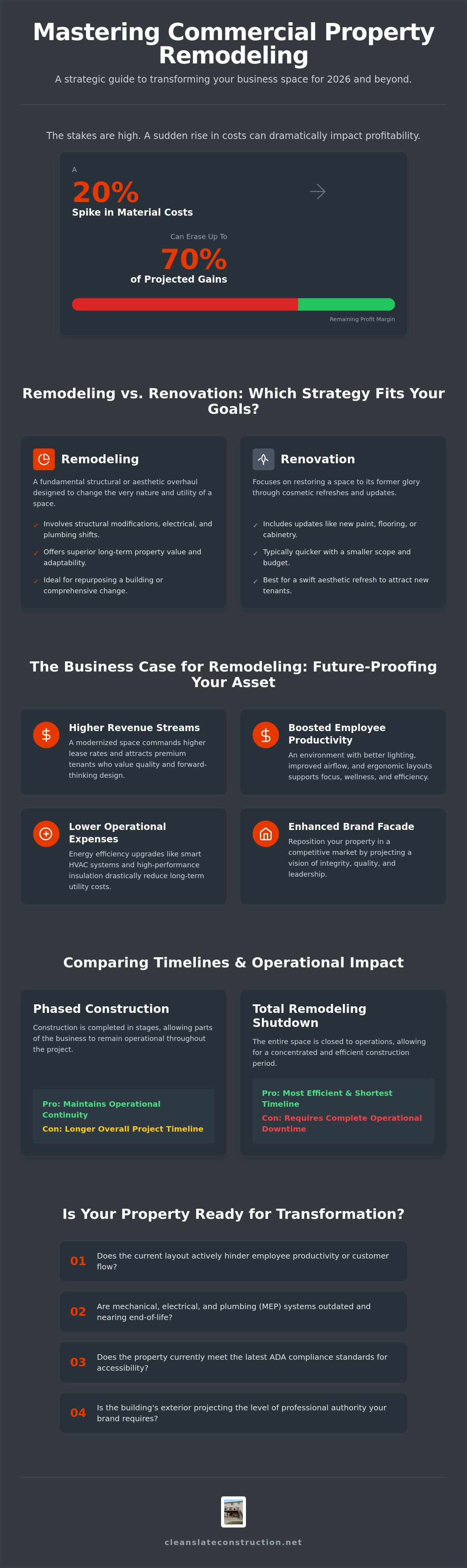
A 20% spike in material costs can instantly erase up to 70% of a project's projected gains, yet the most resilient businesses in 2026 are doubling down on commercial property remodeling to stay ahead of the curve. You likely recognize that your current environment no longer reflects your brand's excellence, but the fear of operational downtime and the hidden costs tucked inside older structures often keep the vision on hold. It's a delicate balancing act between aesthetic transformation and the need for steady operational continuity.
Whether you are looking to revitalize a retail storefront or overhaul a corporate headquarters, this guide will empower you to master the complexities of the modern renovation landscape. We'll show you how to navigate the latest building codes, mitigate the impact of rising material prices, and choose between phased renovations or full-scale transformations to ensure your investment delivers maximum ROI. This comparison provides the precision you need to achieve a modernized, energy-efficient space that is completed on time and within budget.
Table of Contents
Understanding Commercial Property Remodeling in 2026
Commercial property remodeling serves as a strategic evolution of your physical workspace. It isn't just about fresh paint or modern furniture. It is a fundamental structural or aesthetic overhaul designed to align your property with modern business demands. In 2026, the industry has shifted toward adaptive reuse and flexible office layouts. These trends respond to a market that prizes versatility. Whether you require specialized retail space remodels to attract foot traffic or comprehensive commercial office repairs to maintain structural integrity, precision is the standard. A master craftsman approach ensures that every structural change maintains the integrity of the building while delivering a polished, high-end finish that suggests reliability and success.
Remodeling vs. Renovation: Key Differences
Understanding the distinction between remodeling and renovation is vital for planning your budget and timeline. Renovation typically focuses on restoring a space to its former glory through cosmetic refreshes, such as new flooring or cabinetry. Remodeling, however, involves changing the very nature of the space. This often requires complex permit applications for structural modifications, electrical rerouting, or plumbing shifts, especially as states like Pennsylvania and Georgia adopt the 2021 International Code Council standards in 2026. While renovations are quicker, remodeling projects offer superior long-term property value appreciation by fundamentally improving the building's utility. A structural transformation makes a property more adaptable for future needs, which is a key priority for savvy owners.
The Business Case for Remodeling
The decision to invest in commercial property remodeling is driven by clear financial objectives. A modernized space often commands higher lease rates and attracts premium tenants who value quality. It also boosts employee productivity by creating an environment that supports focus and wellness through better lighting, improved airflow, and ergonomic layouts. Beyond immediate revenue, energy efficiency upgrades drastically lower long-term operational expenses. Installing smart HVAC systems or high-performance insulation reduces utility costs for years. This process offers a clean slate for your brand facade. It allows you to reposition your property in a competitive 2026 market by projecting a vision of integrity and forward-thinking leadership. You aren't just fixing a building; you are future-proofing an asset.
Remodeling vs. Renovation: Which Strategy Fits Your Business Goals?
Your business goals serve as the primary blueprint for every construction decision you make. Choosing the right path requires a clear understanding of the outcome you desire for your property. Whether you are aiming for a swift aesthetic refresh to attract a new tenant or a deep structural transformation to repurpose an entire building, the scope must align with your long-term vision. A renovation is often viewed as a "quick fix" that restores the visual appeal of a space. In contrast, commercial property remodeling is an investment in a long-term asset that fundamentally alters how a building functions and serves its occupants. This distinction is critical for managing both your budget and your expectations.
Before committing to a specific direction, a thorough assessment of your current structure is essential. Meticulous care during this evaluation phase prevents the dreaded "scope creep" that can derail timelines and inflate costs. Consider this checklist to gauge your building's readiness:
Does the current layout actively hinder employee productivity or customer flow?
Are the mechanical, electrical, and plumbing systems original to the structure and nearing the end of their lifespan?
Does the property currently meet the latest ADA compliance standards for accessibility?
Is the building's exterior projecting the level of professional authority your brand requires?
Approaching these questions with honesty and precision ensures that your project starts on a foundation of integrity. If you are unsure where your project falls on this spectrum, consulting with a specialist in retail space remodels can provide the clarity needed to move forward with confidence.
When to Choose a Full Remodel
A full remodel is the right choice when your goals involve comprehensive change. This is necessary when you are adapting a space for a completely different industry, such as converting a traditional retail storefront into a high-precision medical clinic. It is also the standard approach when outdated MEP systems no longer support modern technology or when significant structural wear threatens safety. Remodeling allows you to strip away the old and build a vision that is durable, efficient, and perfectly tailored to your current needs.
When a Renovation Suffices
Renovations are ideal for businesses that have a solid structural foundation but need a modernized aesthetic. If you are updating your interiors to match a new corporate brand identity or making minor layout adjustments that don't involve load-bearing walls, a renovation is a cost-effective solution. This approach is particularly useful for budget-conscious updates during short-term tenant leases. It provides a polished, functional result without the extensive permit requirements or timelines associated with major structural changes.
Phased vs. Total Remodeling: Comparing Timelines and Operational Impact
Choosing between a swift, total overhaul and a strategic, phased approach is one of the most critical decisions in commercial property remodeling. It is a choice between maximum speed and operational continuity. While a total shutdown allows for an aggressive timeline, a phased strategy protects your immediate revenue streams. Each path requires a different level of logistical precision to ensure the project remains a success without compromising your business's integrity. Whether you prioritize a fast-tracked opening or a steady cash flow, the decision should align with your specific financial goals and the needs of your clientele.
The Total Shutdown Approach
The total shutdown approach is often the preferred method for complex structural changes or full-scale transformations. By closing the doors temporarily, you provide contractors with unrestricted access to the entire floor plan. This freedom allows for the efficient use of heavy machinery and the rapid installation of updated mechanical, electrical, and plumbing systems. Projects completed under a total shutdown are typically faster and cleaner because there is no need to reset the site daily. However, owners must carefully calculate the opportunity cost of lost business during the closure. If the projected ROI of a faster completion outweighs the temporary loss of revenue, this path offers the most direct route to a polished, high-end result.
Timeline: Accelerated completion through 24/7 access and streamlined workflows.
Operational Impact: Complete pause in on-site business activities.
Safety: Maximum control over the construction environment with no civilian presence.
The Phased Remodeling Strategy
Phased remodeling is a sophisticated balancing act that requires a welcoming partnership between the contractor and the business owner. This strategy allows you to maintain revenue by remodeling in specific zones or during after-hours shifts. It is particularly effective for large-scale corporate offices or retail spaces that cannot afford to go dark. The primary challenge lies in the logistical management of dust, noise, and safety protocols. Protecting sensitive equipment and staff from construction debris is a full-time commitment. Success in a phased project relies heavily on transparent communication and meticulous site management to protect employee morale and the customer experience.
A Trusted Master Craftsman takes ownership of these complexities from start to finish. Whether it is coordinating a midnight concrete pour to avoid disrupting morning foot traffic or installing temporary dust barriers to protect inventory, precision is non-negotiable. This meticulous care ensures that your project moves forward with momentum while your business continues to thrive. By prioritizing safety and cleanliness, you maintain a professional environment that respects both your staff and your clientele. A steady hand is required to manage these moving parts, ensuring that construction never encroaches on the professional standard your brand represents.
Essential Material Comparisons for High-Traffic Commercial Spaces
Selecting the right materials is the moment where your vision meets the reality of daily wear and tear. In the context of commercial property remodeling, your choices must balance immediate aesthetic impact with long-term durability. A high-traffic environment demands surfaces that can withstand heavy foot traffic, frequent cleaning, and the occasional impact without losing their professional luster. Whether you are selecting finishes for a sleek corporate lobby or a rugged retail floor, the materials you choose act as the silent foundation of your brand's reputation. Precision in these early decisions prevents premature wear and costly replacements down the road.
Durability doesn't have to come at the expense of craftsmanship. Modern composite materials have revolutionized exterior spaces, offering the warmth of traditional wood with a level of resilience that resists rot, fading, and warping. For businesses looking to extend their professional environment outdoors, high-performance composite deck installation provides a steady, low-maintenance solution that maintains its integrity for decades. This commitment to quality materials reflects the "job-well-done" ethos that defines a truly successful transformation.
Commercial Flooring: Durability vs. Design
Flooring is the most heavily used element in any commercial space. Luxury Vinyl Tile (LVT) has become a favorite for modern offices because it offers a sophisticated look, exceptional underfoot comfort, and impressive acoustic dampening. It mimics natural stone or wood while providing a surface that is easy to sanitize. Conversely, polished concrete remains the gold standard for retail ruggedness. It is virtually indestructible, reflects light to brighten a space, and requires minimal long-term maintenance. While commercial carpet remains a viable option for quiet breakout zones, its maintenance lifecycle is often shorter in high-spill areas. Choosing between these options requires a clear understanding of your daily operations and your cleaning budget.
Lighting and Fixtures: Efficiency vs. Atmosphere
Lighting does more than just illuminate a room; it shapes the entire customer experience. LED retrofitting is a practical choice for lowering operational expenses, but custom architectural lighting is what creates a lasting retail impact. Smart lighting systems allow you to adjust the atmosphere throughout the day, improving tenant satisfaction and reducing energy waste. For those managing specialized facilities, you can find detailed insights on high-performance fixtures in our 2026 Guide to Locker Room Renovation Cost Per Square Foot. These specialized choices ensure that every corner of your property, from the boardroom to the back-of-house, meets a standard of excellence.
If you are ready to elevate your business environment with materials that stand the test of time, our team is here to guide your next project. Contact us today for expert assistance with your retail space remodels and structural upgrades.
Executing Your Commercial Vision with Clean Slate Construction
A vision requires a steady hand to become a reality. At Clean Slate Construction, we believe that every project is an opportunity to build more than just walls. It's about establishing a foundation of trust through a welcoming partnership that prioritizes your unique business goals. As a Christian-owned general contractor, we approach commercial property remodeling with a deep commitment to integrity, honesty, and reliable timelines. We understand that your property is a significant asset. Our role is to act as a diligent guide, taking ownership of the process from the first conceptual sketch to the final coat of paint. Precision is our baseline, and excellence is our standard.
Navigating the complexities of 2026 construction requires more than just tools. It demands a sophisticated understanding of the latest regulatory landscapes. By combining visionary design with the grounded expertise of a licensed general contractor, we navigate the updated 2021 International Code Council standards so you don't have to. We manage the intricate details of permitting and structural compliance, allowing you to focus on running your business. Whether we are executing high-precision office repairs or complete retail space remodels, our team ensures that every phase of development moves forward with momentum and clarity.
The Clean Slate Pre-Construction Phase
Success begins long before the first hammer swings. Our pre-construction phase is designed to eliminate the uncertainty that often plagues large-scale projects. We conduct detailed site assessments to identify potential challenges in older structures, which prevents mid-project budget surprises. During this phase, we collaborate closely with you to balance visionary aesthetics with practical, daily use. Transparent communication is our priority. We keep you informed during the permitting process, ensuring that every structural change is documented and approved before work commences. This methodical approach builds the stability needed for a stress-free transformation.
Quality Assurance and Project Closeout
The final stages of a project define its long-term success. Our "Trusted Master Craftsman" standard means we are obsessed with the smallest details during the final punch list and finish work. We don't just finish a job; we ensure every system is optimized for peak performance. This includes rigorous checks of all commercial systems, from HVAC efficiency to the precision of MEP installations. Our process concludes with a comprehensive final walkthrough. We ensure the space is polished, functional, and ready for immediate business use. To maintain this level of shine and professionalism after the dust settles, you can visit Vitres Ultra Nettes for expert commercial window cleaning services. You deserve a result that reflects your brand's excellence, and we take pride in delivering a job well done that stands the test of time.
Building Your Future with Precision and Integrity
Successful commercial property remodeling is more than a construction project; it's a strategic investment in your business's longevity and professional standing. By choosing the right strategy between a phased renovation or a total shutdown, and selecting materials that balance aesthetic appeal with commercial-grade durability, you ensure your space remains a high-value asset. Whether you are navigating complex 2026 building codes or managing the logistics of an occupied office, the right partnership makes all the difference in the final result.
As a Christian-owned general contractor, we bring a steady hand and a commitment to honesty to every task. Our licensed expertise in retail and office remodels ensures that your vision is executed with meticulous care and completed on a reliable timeline. We take pride in our workmanship and prioritize your operational goals from the first site assessment to the final walkthrough. Start your commercial transformation with Clean Slate Construction today. Your business deserves a space that reflects its excellence, and we are ready to help you build it with integrity and precision.
Frequently Asked Questions
How long does a typical commercial property remodeling project take in 2026?
Timelines for a standard commercial project typically span three to six months, though the specific duration depends on the complexity of the scope. Factors such as current material lead times and the implementation of 2021 I-Codes influence the schedule. Whether you choose a total shutdown for speed or a phased approach for continuity, a methodical plan is the key to maintaining momentum.
What is the average cost per square foot for commercial office remodeling?
Industry data for 2026 suggests that a standard office remodel generally ranges from $75 to $250 per square foot. Cosmetic refreshes sit at the lower end of this spectrum, while high-end executive suites or structural overhauls reach the upper tier. It's drama essential to account for material price volatility, particularly for copper and steel, when finalizing your commercial property remodeling budget. For structural expansions, Bradberry Steel offers reliable pre-engineered systems that help maintain quality while managing material overhead.
Do I need a building permit for minor commercial interior renovations?
Yes, most jurisdictions require a building permit for commercial renovations that involve structural, electrical, or plumbing modifications. Even minor layout changes must comply with the updated 2021 International Building Code standards that took effect in many states on January 1, 2026. Securing proper permits ensures your project meets safety requirements and protects your long-term property value.
How can I minimize business disruption during a phased remodel?
Minimizing disruption requires a strategic combination of after-hours work, temporary dust barriers, and clear communication with your staff. Maintaining a professional environment during construction is a priority for any diligent business owner. A steady hand in project management ensures that noise and debris are contained, allowing your daily operations to continue with minimal interference.
What are the most durable materials for high-traffic retail spaces?
Polished concrete and high-performance Luxury Vinyl Tile (LVT) are the most resilient choices for high-traffic retail environments. These materials offer a blend of aesthetic appeal, ease of maintenance, and exceptional longevity. For exterior zones, composite materials provide a durable alternative to wood, resisting the wear and tear of heavy foot traffic and environmental exposure without requiring frequent repairs.
Does a commercial remodel increase property tax or insurance premiums?
A comprehensive remodel typically increases the assessed value of a property, which may lead to higher property taxes and adjusted insurance premiums. While these costs can rise, the improved safety features and structural integrity often make the property more attractive to insurers. It's wise to consult with your tax advisor and insurance agent during the pre-construction phase to understand the long-term impact.
What is the expected ROI for a commercial building facade upgrade?
A facade upgrade delivers a significant return on investment by increasing curb appeal and attracting high-quality tenants. Modernizing your building's exterior signals success and reliability to the market, often allowing for higher lease rates. Additionally, incorporating energy-efficient elements during a facade overhaul can lead to substantial savings on long-term operational expenses, further improving your overall ROI.
How do I choose between a general contractor and a specialized TI contractor?
Choose a general contractor when your project involves structural modifications, exterior repairs, or complex mechanical upgrades. A licensed general contractor provides the comprehensive oversight and precision required for large-scale commercial property remodeling. If your project is strictly limited to interior cosmetic updates within a leased space, a Tenant Improvement (TI) contractor may be suitable, though they often lack the capacity for major structural transformations.


Comments